
Art as an Antidote: Why supporting Artists Matters More Than Ever
Nearly two years have passed since I made the decision to leave New York City, a successful career in corporate retail (its corresponding six-figure salary), and the extensive networks and organizations where I had invested so much of my time and energy.
Believe me, the idea that I had found a way to connect every facet of my life under one mission initially left me in as much shock and disbelief as you might be feeling. My entire life I’d been told it was impossible to bridge my career with my passions and extracurriculars. I had spent 15 years compartmentalizing my work life, my dance life, and my experience building community organizations, producing large-scale events, and orchestrating creative collaborations. When I realized I could unite them all into one path, and that it felt as natural as if my life was always meant to lead to this, my hesitation cleared and made way for a surge of excitement.
Within 24 hours, I had formulated a concrete vision for an organization that was built on the heartfelt conviction that Art is not a luxury; it is, in fact, one of our most powerful and valuable natural resources for driving positive social change. By the second day, I had developed the structure and strategy that would champion the three principles I value most in life: Art, Community, and Collaboration! And by the end of the week, I was making arrangements to move back to California.
(Visit Founder’s Journey for more details)Needless to say, the conviction to dedicate myself to empowering artists was immediate and easy, but the decision and process of starting over have proven to be some of the most challenging work of my life. It’s for this reason, that when I recently came across this conversation between Morgan Radford and Lin-Manuel Miranda, I was suddenly and very pleasantly struck by a profound feeling of affirmation. You see, Radford’s poignant question: “Is art an antidote in some way?”, was the exact question that inspired my decision. In many ways, Miranda’s thoughtful response reaffirms my heartfelt beliefs about the role artists and art play in society. Their conversation perfectly articulates the very mission, path and purpose I’ve been pursuing for the greater part of the last 2 years.
Miranda shines a light on the incredible way art can reflect society while also serving as a valuable resource. This parallels many of my own conversations with artists and activists and highlights art's ability to promote healing, connection, and transformation by helping us make sense of our emotions, confront difficult truths, and imagining new possibilities. But what filled me most with joy was the fact that their conversation reinforced the underlying argument behind my "Art Beyond Entertainment" campaign, by positioning artists as overlooked agents of positive social change, who deserve our gratitude, recognition, and support!
Art as a Catalyst for Positive Social Change
History is rich with examples of artists’ positive impact on society. Their creations (often the only reference we have of our past) are proof of their power and potential as champions for marginalized voices, and influential contributors to our society.
Think of Diego Rivera’s murals which galvanized the Mexican identity or the Chicano murals of the 60’s and 70’s that sparked a sense of cultural identity and political rights in Mexican-American communities. The AIDS Memorial Quilt that raised awareness and fueled activism, or the impact and history of Fania Records and Motown who used music to unite communities, foster cultural pride and protest injustice.
Art has consistently offered a platform for those who need it, fostered empathy, and inspired collective action, because of its ability to cross language barriers, stir emotions, and bring people together around shared values and visions for a brighter future.
But beyond the social impact, artists offer a substantial impact on economies as well. In the U.S. alone, the arts and culture sector contributed $1.1 Trillion to the National GDP, surpassing other industries (like agriculture and transportation) and fueling others (like Tourism and Retail). We recently shared examples of ways in which artists have historically impacted different economies.
<—Watch our Instagram Reel for a quick breakdown of the artists' real economic impact and what we are missing out on when they aren’t supported.
Despite their incredible contributions however, artists are often undervalued, unsupported and under-resourced. National surveys reveal that while 81% of Americans see the arts as a positive force in a troubled world, only 22% believe that artists contribute “a lot” to the greater good of society. In addition, the lack of recognition, institutional support, and access to educational opportunities, particularly for artists from marginalized communities create barriers that limit their success and stifle their creativity. The result is a population where the average salary is 25-50% less than the median US income, with 45% earning nothing from their creations, and nearly half depending on additional jobs to make ends meet.
The BAD: Empowering Artists to Drive Innovation
These challenges are exactly why I shifted my career and am building The BAD (Business & Arts Development). My career taught me that with the right support and resources, the leadership skills developed through the arts (creativity, a team mentality, empathy, adaptability, and resilience) fuel innovation, inspire collaboration and drive results across any industry. And I’ve seen first-hand that investing in artists doesn't just boost their individual careers, it magnifies their impact on society! My mission is to empower artists (particularly those from underrepresented backgrounds) with entrepreneurial tools, training and hands-on experience to overcome systemic barriers, cultivate cross-industry partnerships and turn their creative passions into sustainable, community-minded businesses. In the last year, these efforts have included coaching individual artists, and hosting monthly Artistpreneur Roundtable Discussions, Reflection and Goal Setting Workshops and an Artist Accountability Cohort that launched or improved business ventures for 6 artists.
Art as Antidote: A Call to Action to Support Artists
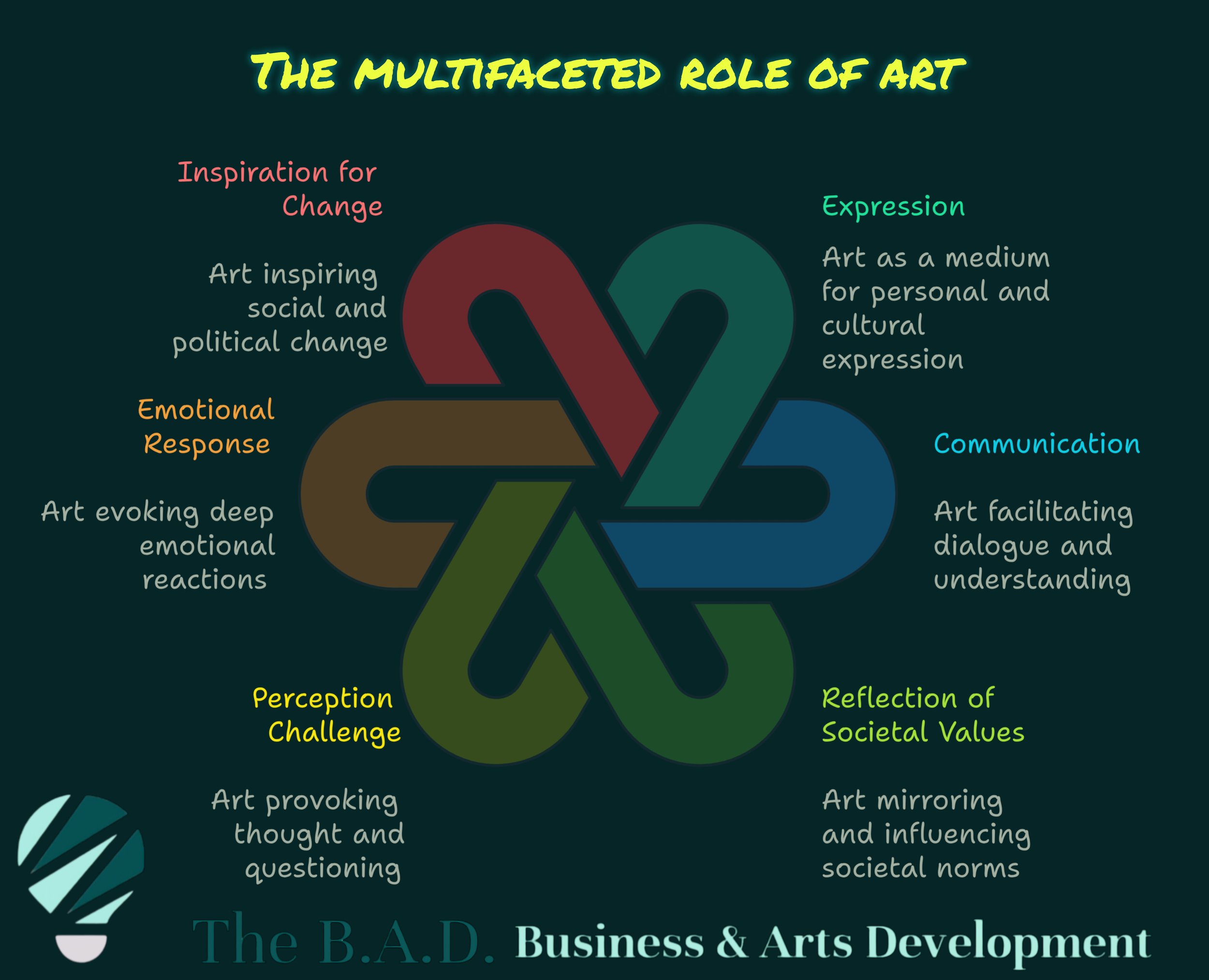
To answer Radford’s question, I wholeheartedly believe that art is an antidote that heals, connects, and transforms individuals, societies and economies for the better. For art to effectively serve that purpose however, we have to collectively acknowledge and support the artists behind it.
Individual Action: This involves rethinking how we show up for the artists in our lives and how we value, support and promote their work. It means uplifting the artists in our communities, investing in their work and recognizing its valuable impact on our collective well-being.
Systemic Action: On a greater scale, it means pushing for and offering fair compensation, funding and recognition, while creating systems and structures that support their success and empower them to lead.
I am committed to supporting artists as essential agents of positive social change and I want to invite you to join me in this vital work! I’m seeking volunteers and potential board members to help me create the resources, systems and structures that will ensure artists can thrive! Together we can ensure a more creative, resilient, and equitable future for us all.
